How to Position Yourself for Success This Year
Super Bowl Sunday is often considered the unofficial start of the spring selling season. With the big game just days away, let’s review what shaped the Bay Area real estate market in 2025 and what’s ahead for 2026.
2025 Recap
-
AI Fuels Growth: AI-related liquidity events and record stock prices injected significant capital into the Bay Area real estate market in 2025. This momentum was partially tempered by tech-sector job cuts and broader macroeconomic uncertainty.
-
Housing Inventory and Volumes Flat: Housing inventory and sales volume were largely unchanged from 2024 levels, with both years approximately 15 percent above the lows of 2023 but still about 20 percent below pre-pandemic norms. This reflects the continued lock-in effect of record-low pandemic-era mortgage rates, alongside affordability constraints and cautious employment outlooks.
-
Improving Mortgage Rates: Mortgage rates declined from approximately 7 percent at the start of 2025 to about 6 percent entering 2026. While more in line with historical averages, rates remain elevated relative to the unusually low levels of recent years.
-
Luxury Rides High: Luxury set records in 2025 with the volume of sales over $5M in Santa Clara County jumping 25% year-over-year. The strength in luxury reflects a split in the outlook of more and less affluent households with luxury receiving an outsized benefit from the capital flowing into AI, generational wealth transfer, and exceptional stock market returns.
-
Condos a Soft Spot: While the median sales price for single-family homes in Santa Clara County rose 4.2 percent from 2024 to 2025, the median price for condos and townhomes declined 3.4 percent. Attached housing has faced increased pressure from rising HOA costs, which have weighed on affordability and buyer demand. These increases stem from compliance with new state regulations, such as the SB 326 balcony inspection law, higher insurance premiums, and, in some cases, special assessments. Condos and townhomes have also been affected by tighter lending standards, which have reduced the pool of qualified buyers.
Kicking Off 2026
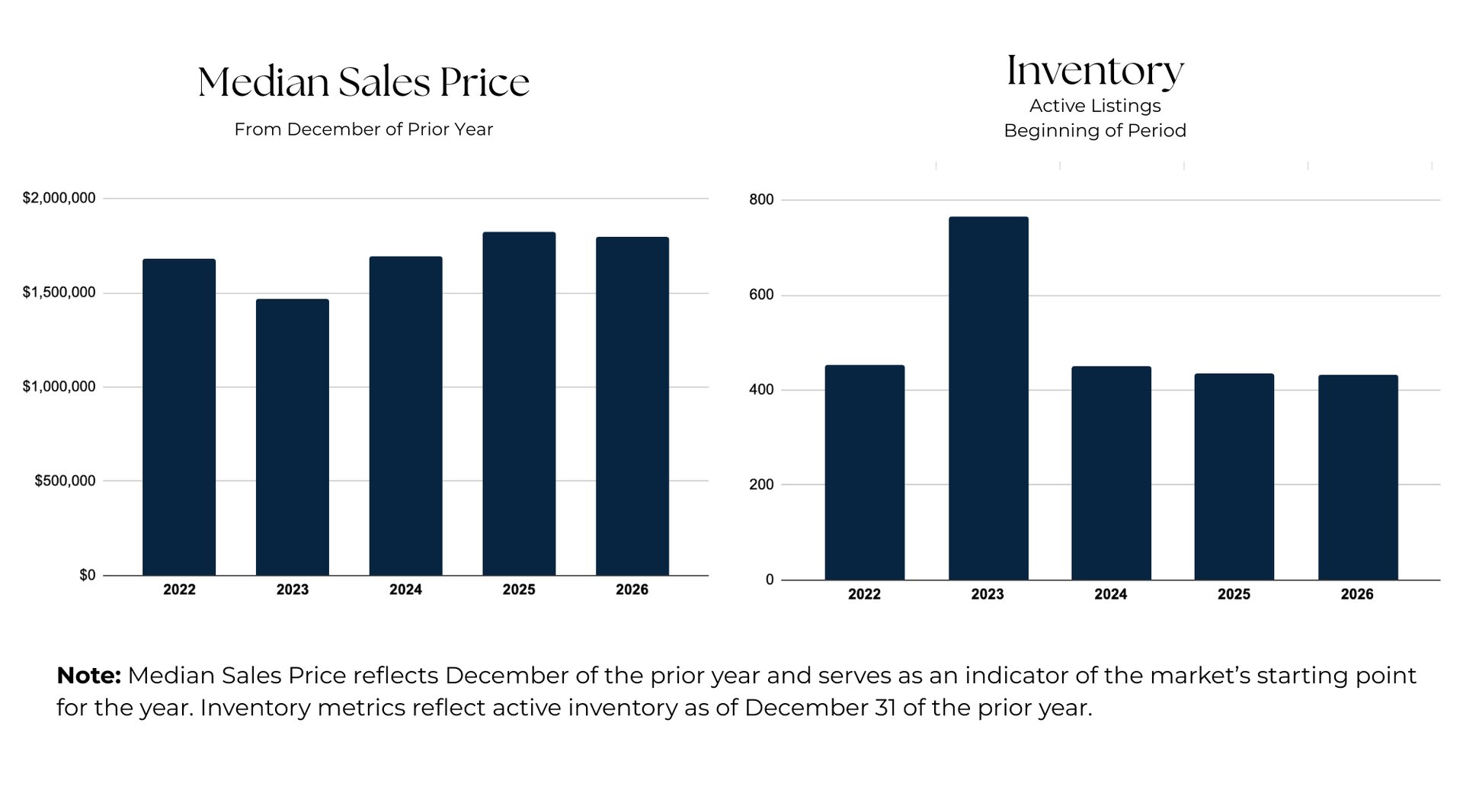
We are entering the year with interest rates at multi-year lows and the stock market at record highs, alongside continued volatility driven by geopolitical uncertainty. Early in the year, it is typical for buyers—often re-energized and ready to act on major life decisions—to re-enter the market more quickly than sellers bring new listings online. This imbalance, with demand rising faster than supply, generally persists through the spring and tends to make these months the most competitive period of the year for sellers. Last year, this seasonal dynamic was muted by tariff-related shocks, and this year broader macroeconomic concerns may again influence market behavior. Median price and inventory levels at the start of the year are broadly comparable to those of the past few years.
What to Expect in 2026
-
Home prices show modest appreciation in the low-to-mid single digits, around +4%.
-
Mortgage rates hold near 6%, with some buyers accessing rates up to half a point lower through relationship-based lender pricing.
-
The market mirrors 2025 dynamics, shaped by ongoing macroeconomic and geopolitical uncertainty.
-
Condos and townhomes face continued headwinds as elevated inventory puts pressure on sale prices.
-
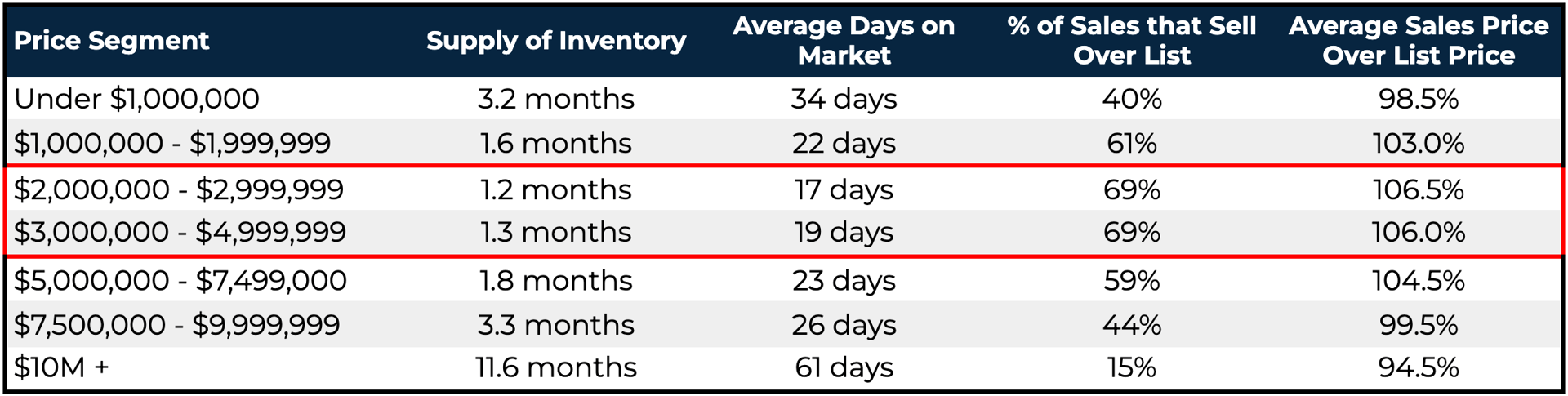
The most competitive segment remains single-family homes priced around $3M:
-
The luxury segment continues to outperform. Cash buyers remain a meaningful presence, supporting resilience and insulating this segment from broader market headwinds.
Advice for Sellers

- Accurate pricing is essential. Last year saw a sharp increase in price reductions—up 52% year over year—as some sellers, anchored to prior appreciation, priced too aggressively. Top-dollar is not achieved by starting high; it is achieved by generating strong buyer demand that drives multiple offers. Correct pricing from the outset remains one of the most important factors in a successful sale.
-
Timing and preparation materially impact outcomes. Market conditions and launch timing can influence the final sale price by hundreds of thousands of dollars. Planning ahead reduces stress, allows time for targeted updates that deliver a strong return, and provides access to top-tier staging if needed. This lead time also supports a disciplined go-to-market strategy— sometimes including testing an aspirational price in the private-market — to maximize results.
Advice for Buyers

- Expect strong competition for quality homes. In the Bay Area, well-priced “good” homes almost always receive multiple offers and sell at a premium. “Good” typically means turnkey (or close to it), a desirable location without road, commercial, or industrial impacts, and access to strong schools.
-
Remember that you sell what you buy. While it may feel challenging to win a competitive home today, you will benefit from that same demand when you eventually sell and buyers are competing for your property.
-
Be fully prepared before you begin. Serious home buying should not start until you have a solid pre-approval and your financing strategy clearly defined.
-
Be ready to act decisively. When the right home comes along, hesitation often means losing it to another buyer who is prepared to move forward immediately.
-
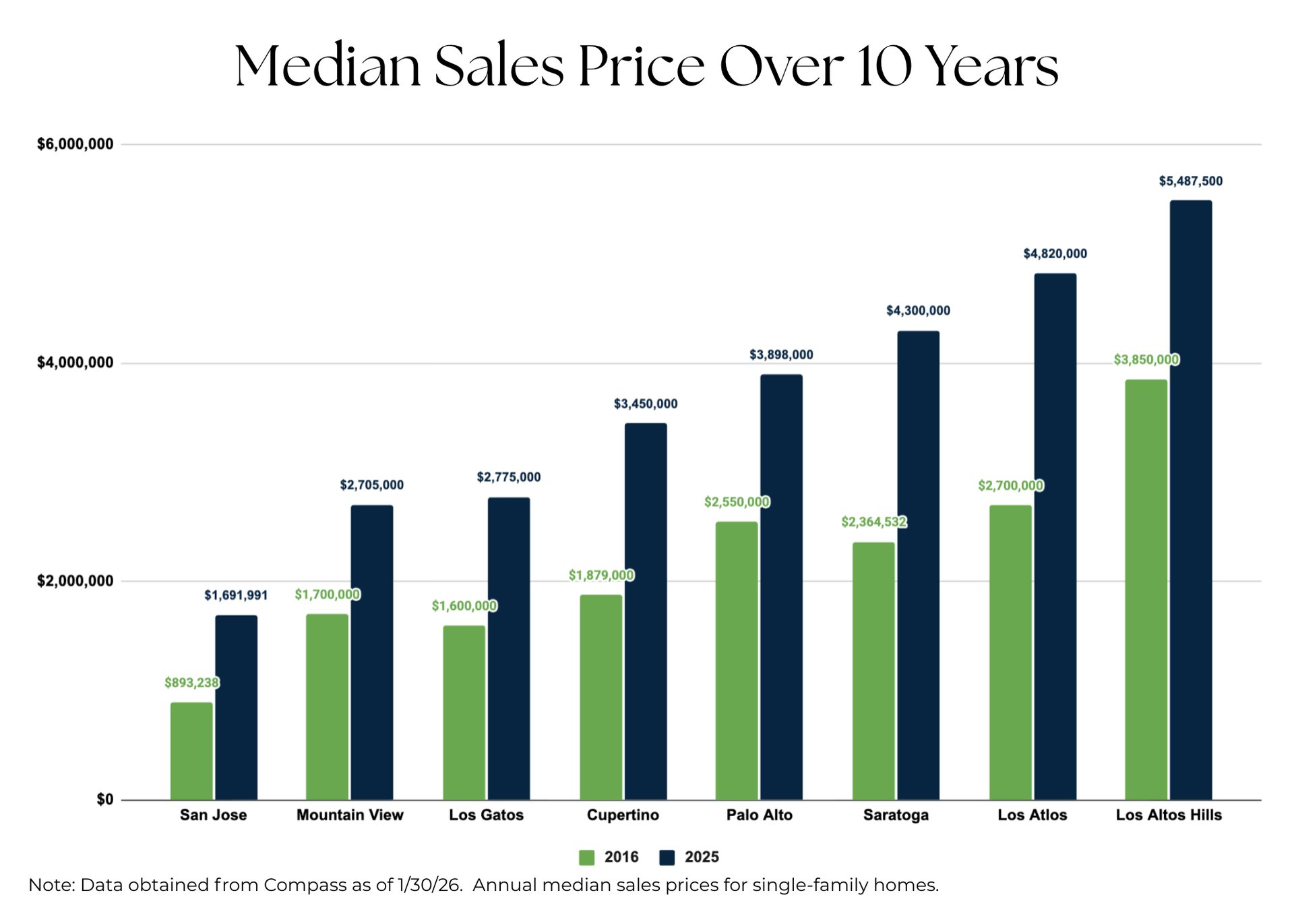
Keep the long view in mind. Buying in the Bay Area can feel intimidating, but long-term appreciation has historically rewarded buyers who are able to enter the market and hold over time: